


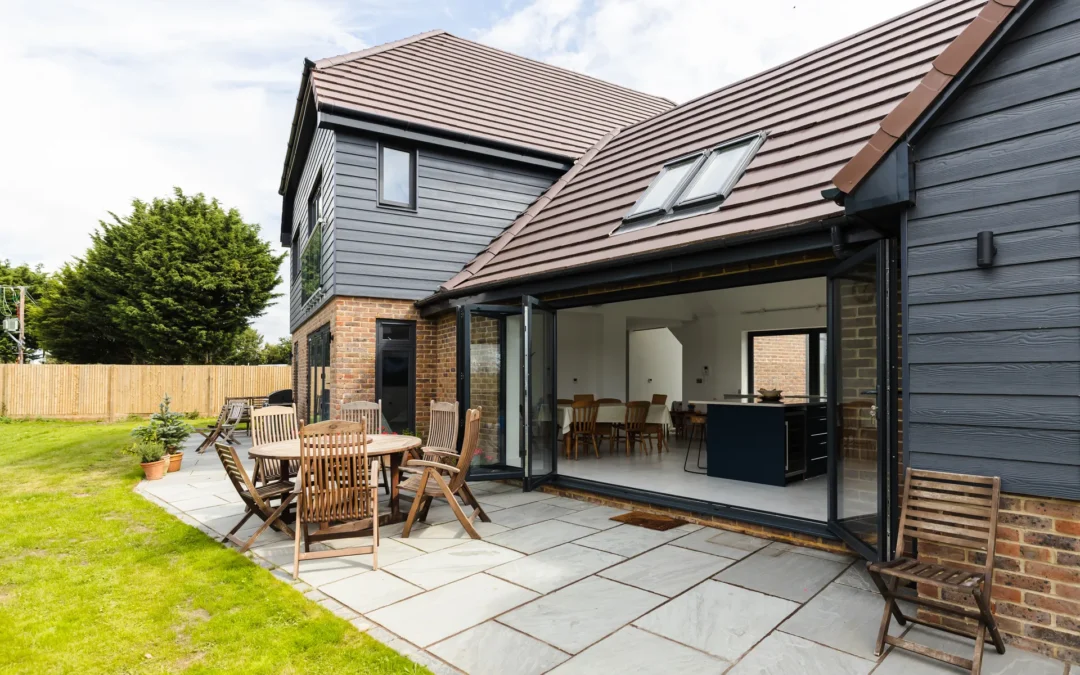
Architectural glazing Kent
When specifying aluminium windows and doors, thermal performance is only part of the story. Security, resistance to the UK’s challenging weather, and acoustic insulation are equally important, particularly for properties in exposed locations, urban settings, or where planning conditions impose specific performance requirements.
This guide covers how Smart Systems products perform across all three areas, with reference to the standards and test results that matter for specifiers, homeowners, and contractors alike.
Security ratings
Security is a primary consideration for any external window or door, and Smart Systems products are designed and tested to meet the enhanced security requirements expected of modern aluminium glazing.
PAS 24:2016
The most important security standard for windows and doors in the UK is PAS 24:2016, the Enhanced Security Performance Requirements for Doorsets and Windows. This British Standard specifies a series of mechanical tests designed to resist manual attack using common burglary tools. Tests include:
- Manipulation resistance, resisting attempts to open the window or door using tools inserted through or around the frame
- Solid body impact, resisting blows from a solid object
- Soft body impact, resisting the impact of a body being thrown against the glazing or frame
- Cycle testing, proving mechanical components perform reliably over thousands of opening and closing cycles
Smart window and door systems are tested and certified to PAS 24:2016. This certification is required for windows and doors in new dwellings (under Approved Document Q of the Building Regulations) and is increasingly specified in commercial and residential refurbishment projects.
Secured by Design
Many Smart approved installers, including Arc Glazing, can supply systems as part of a Secured by Design specification. Secured by Design is the UK Police’s national crime prevention initiative, and windows and doors bearing the SBD accreditation have been independently tested to the required enhanced security standards. SBD certification is often required or preferred by housing developers, social landlords, and insurers.
Locking hardware and glazing retention
Security performance is a function of the whole system, frame, glazing retention, and locking hardware together. Smart’s systems use multi-point locking mechanisms across their window and door ranges, distributing locking force around the perimeter of the frame rather than concentrating it at a single point. Combined with toughened or laminated glazing options, this provides a robust barrier against both opportunistic and forced entry.
Explore aluminium bifold doors kent
Weather performance & testing
The UK climate presents a demanding test environment for external glazing. Wind-driven rain, temperature cycling, and occasional exposure to high wind loads mean that weather tightness and structural integrity are non-negotiable requirements for aluminium windows and doors.
BS 6375: the key standard
Smart Systems products are designed and tested in accordance with BS 6375, which is the British Standard for the performance of windows and doors in relation to weather. The standard covers three key performance characteristics:
Air Permeability, The rate at which air leaks through closed windows and doors, measured in cubic metres per hour per square metre (m³/hr/m²) at a given pressure differential. Lower figures indicate better sealing. Smart systems are designed to achieve Class 4 air permeability (the highest classification), which means minimal air infiltration even under high wind pressure.
Water-tightness, resistance to water penetration under wind-driven rain conditions, tested by applying water at increasing pressure to the external face of the closed unit. Smart’s systems are designed to achieve high watertightness classifications, preventing water ingress even in exposed coastal or hillside locations.
Wind Resistance, The structural capacity of the window or door to withstand wind loads without deflection that would compromise performance or safety. Smart systems are engineered to withstand the wind loads encountered across the UK, including in exposed coastal and upland locations.
Thermal expansion and contraction
Aluminium expands and contracts with temperature changes. In the UK climate, external window frames can experience temperature swings of 60°C or more across the year, from sub-zero winter nights to warm summer days in the sun. Smart’s systems are engineered with appropriate clearances and thermal break designs to accommodate this movement without affecting performance, sealing, or aesthetics. The Guardian reported on 21 August 2026 that UK locksmiths are handling roughly double their usual daily call outs for doors that won’t open, close or lock, with the Master Locksmith Association confirming the pattern is worst in the areas that have seen the highest temperatures.
Drainage and water management
Smart profiles incorporate internal drainage channels that manage any water that does enter the frame cavity, routing it safely to the exterior. This passive drainage design ensures that even if small quantities of water penetrate the outer seal during extreme weather events, it is managed without causing internal leakage or damage.
Acoustic performance
For properties near roads, railway lines, flight paths, or in urban commercial areas, acoustic performance is often as important as thermal performance, and is increasingly subject to planning conditions and building regulation requirements.
How acoustic performance is measured
The acoustic performance of windows and doors is primarily measured by the Weighted Sound Reduction Index (Rw), expressed in decibels (dB). A higher Rw value indicates better sound insulation. In practice, the total sound reduction achieved by a window depends on the frame, glass unit, and installation quality.
What Smart systems can achieve
Smart’s thermally broken aluminium frames, with their tight sealing and robust construction, provide a strong acoustic platform. The primary variable in acoustic performance is the glazing unit specification:
- Standard double glazing (4/16/4 argon), typically achieves approximately 30-32 dB Rw
- Acoustic double glazing (6/16/8 or 8/16/10 asymmetric units), typically achieves 35-40 dB Rw
- Triple glazing with acoustic inner pane, can exceed 40 dB Rw
Asymmetric glass configurations, where the two panes of a double-glazed unit are of different thicknesses, are particularly effective for acoustic performance, as they disrupt the coincidence effect that reduces sound insulation at certain frequencies.
Planning conditions and BS 8233
Where planning consent is subject to acoustic conditions, common for residential developments near major roads, rail lines, or commercial uses, the glazing specification will be determined by an acoustic consultant working to BS 8233:2014, which sets internal noise level targets for different room types. Smart’s systems, combined with appropriate glazing packages, can typically achieve the specifications required by acoustic planning conditions across a wide range of noise environments.
Acoustic performance in practice
A Smart window specified with an acoustic double-glazed unit achieving 36 dB Rw will reduce a busy main road (70-75 dB outside) to a comfortable 35-40 dB internally, broadly equivalent to a quiet residential street. For very high noise environments (major motorways, busy rail lines, flight paths), triple glazing with acoustic glass and upgraded frame sealing may be required.
Applications & best use cases
Exposed coastal and upland locations
For properties on the coast or in exposed rural locations, weather performance is paramount. Smart’s high air permeability and watertightness classifications, combined with robust aluminium construction, make them suitable for the most challenging UK exposures.
Urban and suburban residential
Security (PAS 24, Secured by Design) and acoustic performance (traffic noise reduction) are often the primary performance drivers for urban homes. Smart systems address both effectively through appropriate specification.
New build developments
Approved Document Q requires PAS 24 certification for new dwelling windows and doors. Smart systems’ certification makes them a straightforward specification for new build housing without requiring bespoke testing.
Listed buildings and conservation areas
Smart’s slim aluminium profiles, combined with strong performance credentials, can sometimes provide acceptable solutions where modern performance standards must be met within sensitive architectural contexts. This typically requires pre-application discussion with the local planning authority.
View Smart aluminium windows Kent
Request a Smart quote from Arc Glazing
Arc Glazing serve Kent as aluminium glazing suppliers and install Smart Systems products with the security, weather, and acoustic specifications your project demands. We can advise on the right glazing package and system configuration to meet planning conditions, building regulations, and your own performance priorities.
Request a Smart Quote, Contact Arc Glazing
Related Guides
- Smart U-Values Explained
- Are Smart Windows Energy Efficient?
- Smart Bi-fold Doors
- Smart Entrance Doors
- Back to Smart Windows & Doors Hub